
Japanese art is often celebrated for its landscapes, elegant courtesans, and seasonal beauty. Yet another fascinating side of the ukiyo-e tradition explores a world filled with ghosts, demons, shape-shifting animals, and mysterious supernatural beings. These creatures, known collectively as yōkai, have haunted and delighted Japanese imagination for centuries.
From vengeful spirits emerging from lanterns to giant skeletons looming over warriors, artists of the Edo period transformed folklore into some of the most dramatic and memorable images in Japanese art. Today, these supernatural prints remain among the most captivating examples of ukiyo-e, offering a glimpse into the fears, beliefs, and storytelling traditions of historical Japan.
What Are Yōkai?
The term yōkai (妖怪) broadly refers to supernatural beings, monsters, spirits, and unexplained phenomena found in Japanese folklore. Unlike many Western monsters, yōkai are not always evil. Some are mischievous, some are protective, and others simply exist alongside humans in the natural world.
Japanese folklore includes hundreds of yōkai, including:
- Shape-shifting foxes (kitsune)
- Raccoon dogs (tanuki)
- Long-necked spirits (rokurokubi)
- River creatures (kappa)
- Living household objects (tsukumogami)
- Giant skeletons (gashadokuro)
- Mountain goblins (tengu)
These stories were passed down through oral traditions, theatre, literature, and eventually visual art.
The Rise of Ghosts and Monsters in Ukiyo-e
During the Edo period, ghost stories became a popular form of entertainment. Collections of supernatural tales circulated widely, and kabuki theatre frequently adapted legends involving spirits and revenge.
Title: The Kabuki Ghost of Kohada Koheiji
Artist: Katsushika Hokusai

Publishers quickly realized there was strong demand for images depicting these stories. Ukiyo-e artists responded by creating dramatic prints that visualized terrifying apparitions and legendary monsters in vivid detail.
The supernatural genre became especially popular during the nineteenth century, when artists pushed the limits of imagination and printmaking techniques.
Vengeful Ghosts and the Spirit World
One of the most common supernatural subjects in ukiyo-e was the yūrei, or ghost.
Traditional Japanese ghosts are often depicted with:
- Long, loose black hair
- Pale faces
- White burial robes
- Floating bodies without visible feet

Title: Ghost Kiyotaka and Lady Iga no Tsubone
Artist: Tsukioka Yoshitoshi
Many of these spirits were believed to be individuals who died with unresolved emotions, particularly betrayal, injustice, or revenge.
One of the most famous ghost stories is that of Oiwa from the kabuki play Yotsuya Kaidan. Betrayed and poisoned by her husband, Oiwa returns as a terrifying spirit seeking vengeance. Her story inspired countless ukiyo-e prints and remains one of Japan’s best-known ghost tales.
Artists used subtle visual effects, flowing lines, and unusual compositions to make these apparitions appear otherworldly.
Hokusai and the Lantern Ghost
Even artists best known for landscapes explored supernatural themes.
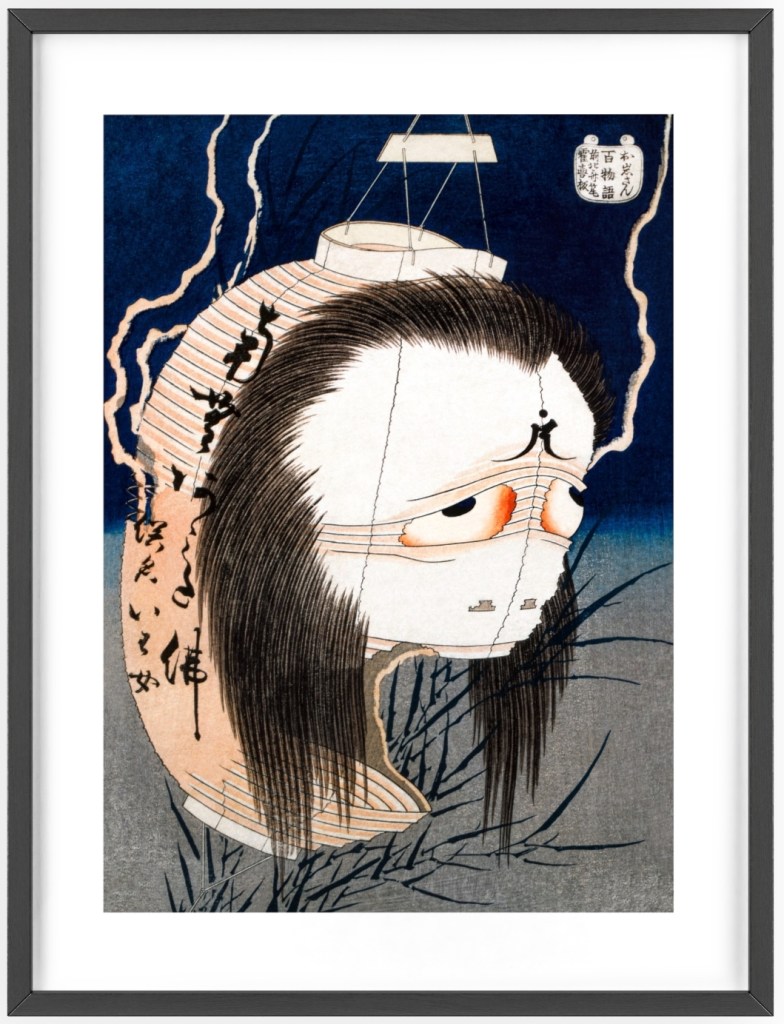
Among the most memorable examples is The Lantern Ghost (Iwa) by Hokusai. The image depicts the spirit of Oiwa emerging from a paper lantern, her distorted face blending seamlessly with the lantern’s form.
The print demonstrates how ukiyo-e artists combined horror with creativity, transforming familiar objects into supernatural visions. More than simply frightening, the image reflects the fluid boundary between the ordinary and the spiritual in Japanese folklore.
Title: The Lantern Ghost, Iwa
Artist: Katsushika Hokusai
Kuniyoshi and the Giant Skeleton
No discussion of supernatural ukiyo-e would be complete without Utagawa Kuniyoshi‘s famous giant skeleton.
In Takiyasha the Witch and the Skeleton Spectre, a colossal skeletal apparition towers over warriors inside a dark palace. The dramatic composition, intricate detail, and sheer scale of the skeleton have made the print one of the most recognizable images in Japanese art.
Kuniyoshi was particularly skilled at depicting legendary heroes, monsters, and fantastical battles. His work helped establish supernatural ukiyo-e as a genre capable of rivaling historical and warrior prints in popularity.
Even today, the giant skeleton remains one of the defining images of Japanese folklore.
Shape-Shifting Animals
Many yōkai were not ghosts at all, but animals possessing magical abilities.
Kitsune
Foxes are among the most important supernatural creatures in Japanese folklore. Intelligent and magical, kitsune can transform into human form and often appear as mysterious women, messengers of the deity Inari, or tricksters testing human character. See our previous post on Kitsune.

Title: Moon at Musashi Plain (Musashino no Tsuki)
Artist: Tsukioka Yoshitoshi
Tanuki
The Japanese raccoon dog occupies a more humorous place in folklore. Tanuki are shape-shifters known for playful deception, good fortune, and comic mischief.
Artists frequently depicted both creatures in human clothing, participating in everyday activities or causing supernatural confusion.
Tengu, Kappa, and Other Creatures
Japanese folklore also includes a wide range of regional supernatural beings.
Tengu are mountain spirits often portrayed with red faces and long noses. Originally feared as dangerous beings, they later became associated with martial arts and mountain ascetics.
Kappa inhabit rivers and ponds. These amphibious creatures can be mischievous or dangerous, but stories often portray them as surprisingly polite and bound by strict rules.
Such creatures demonstrate how folklore was often used to explain natural dangers while entertaining audiences through storytelling.
Title: Mystical Bird (Karyōbinga) or The Tengu Goddess
Artist: Katsushika Hokusai

Why Supernatural Ukiyo-e Remains Popular Today
Part of the enduring appeal of yōkai art lies in its uniqueness. Unlike many Western depictions of ghosts and monsters, Japanese supernatural imagery often blends fear, humour, beauty, and mystery.
These prints reveal a worldview in which the spiritual and physical worlds coexist. Everyday objects may come alive, animals may possess hidden wisdom, and ghosts may linger because of unresolved emotions.
Modern manga, anime, films, and video games continue to draw heavily from these traditions. Many contemporary depictions of supernatural creatures can trace their roots directly back to the folklore and ukiyo-e imagery of the Edo period.
For collectors and admirers of Japanese art, these works offer something more than visual spectacle. They provide a window into centuries of storytelling, belief, and imagination that continue to influence Japanese culture today.
Yōkai, ghosts, and supernatural creatures occupy a fascinating corner of Japanese art history. Through the work of artists such as Hokusai and Kuniyoshi, folklore became vividly visual, allowing audiences to encounter giant skeletons, vengeful spirits, shape-shifting foxes, and mysterious monsters face-to-face.
These images remain some of the most memorable works of ukiyo-e, not simply because they are strange or frightening, but because they capture the rich imagination and storytelling traditions that have shaped Japanese culture for generations.
Join the Conversation
Do you have a favourite yōkai, ghost story, or supernatural figure from Japanese folklore?
Perhaps you’re drawn to the cunning intelligence of kitsune, the eerie presence of Oiwa’s ghost, or the unforgettable giant skeleton of Kuniyoshi’s famous print. We’d love to hear which creatures and stories capture your imagination.
Crane & Pine
To learn more:
Leave a Reply