
Japan’s artistic heritage is shaped by a lineage of masters whose works have transcended time, culture, and geography. These artists range from woodblock print makers of the Edo period to painters who bridged East and West. They didn’t just reflect their world. They reshaped how the world sees art. Below, we explore the legacy of several iconic figures and the ways their visions continue to resonate in modern creativity, with a focus on influential artists in the Japanese print tradition.
Understanding the differences can help you choose pieces that align with your tastes and home decor.
Artist: Kitagawa Utamaro (1753–1806)
Utamaro was one of the most celebrated artists of Japan’s Edo period, best known for his portraits of women. He became particularly renowned for his ōkubi-e (“large-head pictures”), which placed the face and upper body prominently within the composition. Rather than simply depicting fashionable figures, Utamaro explored subtle expressions, gestures, hairstyles, and clothing, giving his subjects a remarkable sense of individuality.
Titles: Messenger with a Letter
Chojiya Hinazuru Hinamatsu
Hairdresser, from Fujin tewaza juni ko

Utamaro’s influence extended well beyond Japan. His prints were among the ukiyo-e works that attracted the attention of European artists and collectors during the late 19th-century Japonisme movement. His elegant compositions and close attention to the human figure helped shape Western perceptions of Japanese art and contributed to the wider appreciation of ukiyo-e around the world.
Artist: Katsushika Hokusai (1760–1849)
Hokusai’s ‘The Great Wave of Kanagawa’ is the most globally recognized image in Japanese art. His influence reaches far deeper than this single masterpiece. His dynamic compositions, mastery of line, and his fascination with nature helped define the ukiyo-e tradition. These qualities continue to inspire modern artists, designers, and illustrators.
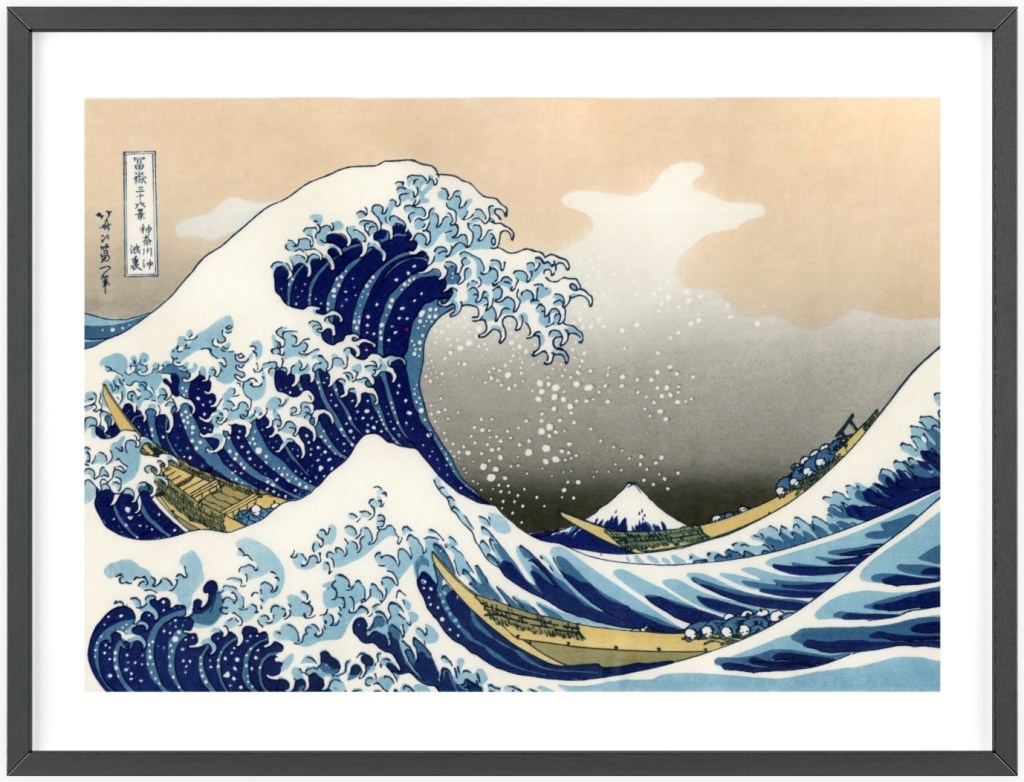
Title: The Great Wave at Kanagawa
Artist: Katsushika Hokusai
Claude Debussy famously hung The Great Wave in his studio. He credited its rhythm and movement for influencing his musical composition ‘La Mer’. Art historian Gian Carlo Calza once noted, “Hokusai was not merely a print maker. He was a visual philosopher. His works taught the West new ways of seeing motion and landscape.”
Today, his stylistic echoes in graphic novels, surf culture, and tattoo art. They also show up in the cinematic framing by directors like Hayao Miyazaki. Miyazaki admired Hokusai’s ability to animate stillness.
Artist: Utagawa Hiroshige (1797–1858)
Hiroshige was known for his poetic landscapes. He captured the atmosphere, weather, and emotion of everyday travel through Japan. His series ‘The Fifty-Three Stations of the Tōkaidō’ revolutionized landscape printing with its subtle colour gradients and storytelling approach.
Title: Snow on Mt. Haruna in Kozuke Province
Artist: Utagawa Hiroshige

When his prints reached Europe, they profoundly shaped Impressionism. Vincent van Gogh copied Hiroshige’s compositions stroke for stroke. This is most notable in Bridge in the Rain (after Hiroshige). He wrote to his brother Theo, “These Japanese artists are not artists, but philosophers…they make us feel nature’s essence.”
Modern photographers and painters still study Hiroshige’s asymmetrical compositions and cinematic cropping. His use of “empty space” has influenced contemporary minimalist design and even modern branding aesthetics.
Utagawa Kuniyoshi (1798–1861)
Kuniyoshi is known for his dynamic warrior prints. He is also famous for supernatural scenes and inventive compositions. He introduced a boldness and dramatic flair. This pushed ukiyo-e into new imaginative territory.

Title: Mimasu Gennosuke no Namiwa no Jirosaku
Artist: Utagawa Kuniyoshi
His exaggerated forms, heroic poses, and fantastical storytelling have had a lasting influence on manga and anime. Osamu Tezuka, often called the “God of Manga,” cited Kuniyoshi as an inspiration for his expressive character designs. Modern art historian Timothy Clark describes Kuniyoshi as a visionary. Kuniyoshi’s graphic energy foreshadows the visual intensity of modern Japanese pop culture.
Kuniyoshi’s dramatic action scenes are influential today. His use of contour lines resonates with comic artists. Video-game designers and illustrators around the world admire them.
Ohara Shōson (Koson) (1877–1945)
A master of kacho-ga (bird-and-flower painting), Shōson is celebrated for his delicate prints that blend realism with emotional warmth. While he worked during the shin-hanga (“new print”) movement, his style maintained classical elegance while incorporating subtle Western shading techniques.
Title: Egrets in Snow
Artist: Ohara Shōson (Koson)

His work has shaped modern nature illustration and wildlife art. According to art critic Kendall Brown, “Koson brought lyricism back into shin-hanga.” His prints are quiet poems. They capture fleeting moments with tenderness.*
Shōson’s influence is visible today in contemporary botanical illustrators. Stationery designers and naturalist artists also echo his careful balance of detail and atmosphere. His prints are also favourites among interior designers seeking serene, nature-inspired décor.
| Artist | Historical contribution |
|---|
| Kitagawa Utamaro | Portraiture, images of women and the development of close-up figure prints |
| Katsushika Hokusai | Landscape, experimentation and the international influence of Japanese art |
| Utagawa Hiroshige | Atmospheric landscapes, travel scenes and seasonal imagery |
| Utagawa Kuniyoshi | Warrior prints, imaginative storytelling and dynamic compositions |
| Ohara Shōson (Koson) | Bird-and-flower prints and the early 20th-century shin-hanga movement |
A Legacy That Still Shapes Global Creativity
Together, these artists forged visual languages that continue to inform not just Japanese art, but global art and design. Their innovations in composition, colour, and storytelling laid the groundwork for several movements. These include Impressionism, manga, contemporary illustration, and even film animation. Hokusai’s dynamic waves contribute to their lasting impact. Hiroshige’s poetic journeys also resonate in modern works. Shōson’s delicate natural studies continue to influence creators. Kuniyoshi’s electrifying battles still inspire today. Their voices still echo in today’s creative work.
Their legacies remind us that great art crosses borders—and centuries.
Which of these artists speaks to you the most? Do you have a favourite print, series, or visual style?
Share your thoughts in the comments below—I’d love to hear what inspires you!
Crane & Pine
To learn more:

Leave a Reply