
Japanese woodblock prints have captivated collectors around the world for centuries. From the dramatic landscapes of Mount Fuji to elegant portraits of actors and beautiful women, these works offer a window into Japan’s artistic and cultural history. Yet many newcomers to Japanese art are surprised to learn that not all traditional-looking Japanese prints belong to the same movement.

Title: Snow at Nezu Gongen Shrine
Artists: Kawase Hasui and Watanabe Shozaburo
Two of the most important styles are ukiyo-e and shin-hanga. While both employ the traditional woodblock printing process, they emerged in different periods and reflect distinct artistic ideals. Understanding the differences can deepen your appreciation of Japanese art and help you discover the styles that resonate most with your personal taste.
What Is Ukiyo-e?
The term ukiyo-e translates roughly as “pictures of the floating world.” This influential art movement flourished during Japan’s Edo period (1603–1868), a time of relative peace, economic growth, and vibrant urban culture.
Ukiyo-e artists created images that reflected the pleasures and interests of everyday city life. Prints depicted famous actors, celebrated courtesans, landscapes, historical warriors, folklore, and scenes from popular entertainment. Because woodblock printing allowed images to be produced in large numbers, ukiyo-e became one of the world’s earliest forms of affordable mass-produced art.

Title: Sudden Shower over Shin-Ōhashi Bridge and Atake
Artist: Utagawa Hiroshige
Characteristics of Ukiyo-e
Ukiyo-e prints are often recognized by:
- Bold outlines and strong graphic composition
- Flat areas of vibrant colour
- Dynamic storytelling and dramatic subjects
- Emphasis on line and design
- Themes drawn from kabuki theatre, folklore, travel, and daily life
Many of the images most associated with Japanese art today originated in the ukiyo-e tradition.

Title: Tamatora has recovered the pearl from the palace on the Dragon king
Artist: Utagawa Kuniyoshi
Among the most celebrated ukiyo-e artists are:
- Katsushika Hokusai, creator of The Great Wave
- Utagawa Hiroshige, renowned for lyrical landscape series
- Utagawa Kuniyoshi, famous for warriors, legends, and imaginative designs
Their works helped shape Western perceptions of Japanese art and later influenced European Impressionist and Post-Impressionist painters.

Title: Kabuki Actor Ōtani Oniji III as Yakko Edobei
Artist: Tōshūsai Sharaku
The Emergence of Shin-hanga
By the late nineteenth century, Japan had undergone rapid modernization following the Meiji Restoration. Traditional ukiyo-e declined as photography and new printing technologies became widespread.
In the early twentieth century, a new movement called shin-hanga, meaning “new prints,” sought to revive the beauty of traditional woodblock printing while adapting it to modern artistic tastes.
Rather than focusing on the bustling entertainment districts of Edo, shin-hanga artists often emphasized atmosphere, mood, and natural beauty. Their works appealed both to Japanese audiences and to growing international interest in Japanese art.
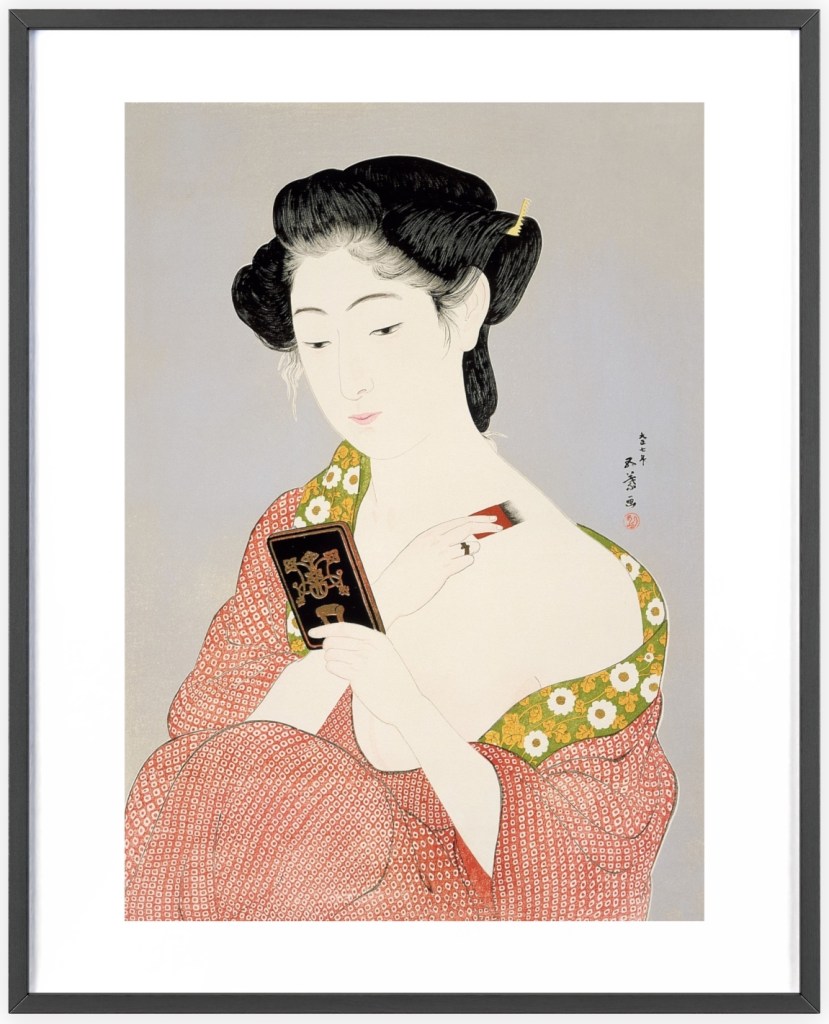
Title: Woman Applying Powder
Artist: Hashiguchi Goyō
Characteristics of Shin-hanga
Although shin-hanga retained the collaborative woodblock process involving designer, carver, printer, and publisher, its visual style differed noticeably from classical ukiyo-e.
Shin-hanga prints often feature:
- Softer colour palettes
- Subtle gradations of light and shadow
- Greater realism and depth
- Atmospheric effects such as rain, snow, mist, and moonlight
- Influences from Western painting techniques
The result is a style that feels both traditional and modern, blending Japanese craftsmanship with contemporary artistic sensibilities.
A Leading Shin-hanga Artist
One of the movement’s most admired artists was Hiroaki Takahashi, often known simply as Shōtei.
His prints captured tranquil landscapes, village scenes, temples, bridges, and seasonal views with remarkable delicacy. Rather than dramatic action, his work invites quiet contemplation and appreciation of everyday beauty.

Title: Katsuyama Neighbourhood
Artist: Hiroaki Takahashi
Today, Shōtei’s prints remain among the most beloved examples of the shin-hanga movement and are highly sought after by collectors.
Ukiyo-e vs. Shin-hanga at a Glance
While both styles share the woodblock printing tradition, they differ in important ways:
| Ukiyo-e | Shin-hanga |
|---|---|
| Edo period (1603–1868) | Early 20th century |
| Bold outlines and graphic design | Softer tones and atmospheric effects |
| Focus on actors, courtesans, folklore, and daily life | Focus on landscapes, beauty, and mood |
| Flat colour areas | Enhanced shading and depth |
| Traditional urban culture | Blend of Japanese and Western artistic influences |
Neither style is superior; they simply represent different moments in Japan’s artistic evolution.
Which Style Appeals to You?
Collectors who enjoy dramatic compositions, historical subjects, and iconic Japanese imagery often gravitate toward ukiyo-e. The works of Hokusai, Hiroshige, and Kuniyoshi offer a rich introduction to Japan’s cultural heritage and storytelling traditions.

Title: Ochtend in Beppu
Artists: Kawase Hasui and Watanabe Shozaburo
Those who prefer tranquil scenes, subtle colour harmonies, and atmospheric beauty may find themselves drawn to shin-hanga. Artists such as Hiroaki Takahashi demonstrate how traditional techniques continued to evolve in the modern era.
Many collectors ultimately appreciate both styles, recognizing that together they tell a broader story of Japanese printmaking across centuries.
A Living Tradition
The relationship between ukiyo-e and shin-hanga is not one of replacement but of continuation. Shin-hanga artists inherited the craftsmanship, techniques, and visual language of earlier masters while adapting them for a changing world.
Whether you are captivated by the dramatic energy of Edo-period actor prints or the serene landscapes of the early twentieth century, both movements reveal the enduring beauty and artistry of Japanese woodblock printing. Exploring the differences between them offers a deeper appreciation of the remarkable tradition that continues to inspire collectors and artists around the globe.
__
Crane & Pine
To learn more:
Leave a Reply